
SBD: How and Why You Should Master the Barbell
The “Big 3”—Squat, Bench Press, and Deadlift—are foundational barbell compound exercises. They’re not just staples of powerlifting; they’re among the most effective movements for building raw strength, muscular coordination, and full-body resilience. Understanding why they matter and how to organize them in a program can genuinely transform your training.
Technique Tips
Beginner

Why Do Barbell Compound Exercises?
Barbell squats, bench presses, and deadlifts simultaneously load multiple major muscle groups, making them highly efficient for strength and muscle development. They allow you to handle heavy weights that engage both prime movers and stabilizers. This broad recruitment leads to more coordinated force production and impressive neuromuscular adaptations compared with many isolation movements.
These lifts also lend themselves to progressive overload—the cornerstone of strength gains. Adding small increments of weight, reps, or sets over time forces adaptation. Barbells make this predictable and trackable, and research shows strength improvements are measurable over long training cycles with consistent overload strategies.
Other benefits include:
- Functional strength: the patterns mimic real-world movements like pushing, squatting, and lifting off the ground.
- Time efficiency: hitting many muscles in one movement saves time compared with isolated lifts.
- High metabolic demand: heavy compounds elevate energy expenditure more than single-joint exercises.
Starting Out: Squat, Bench, Deadlift
When you’re new to barbell training, technique and consistency come before heavy loading.
Squat: Start with a foundational version (e.g., high-bar back squat) and focus on balance, hip and ankle mobility, and a stable bracing pattern. Working through accessible progressions (e.g., goblet squats or box squats) helps establish correct mechanics before loading heavily.
Bench Press: Learn scapular control and stable shoulder positioning first. Setting your back tight on the bench and maintaining a consistent bar path cultivates safety and strength. Beginners often benefit from paused reps to reinforce control.
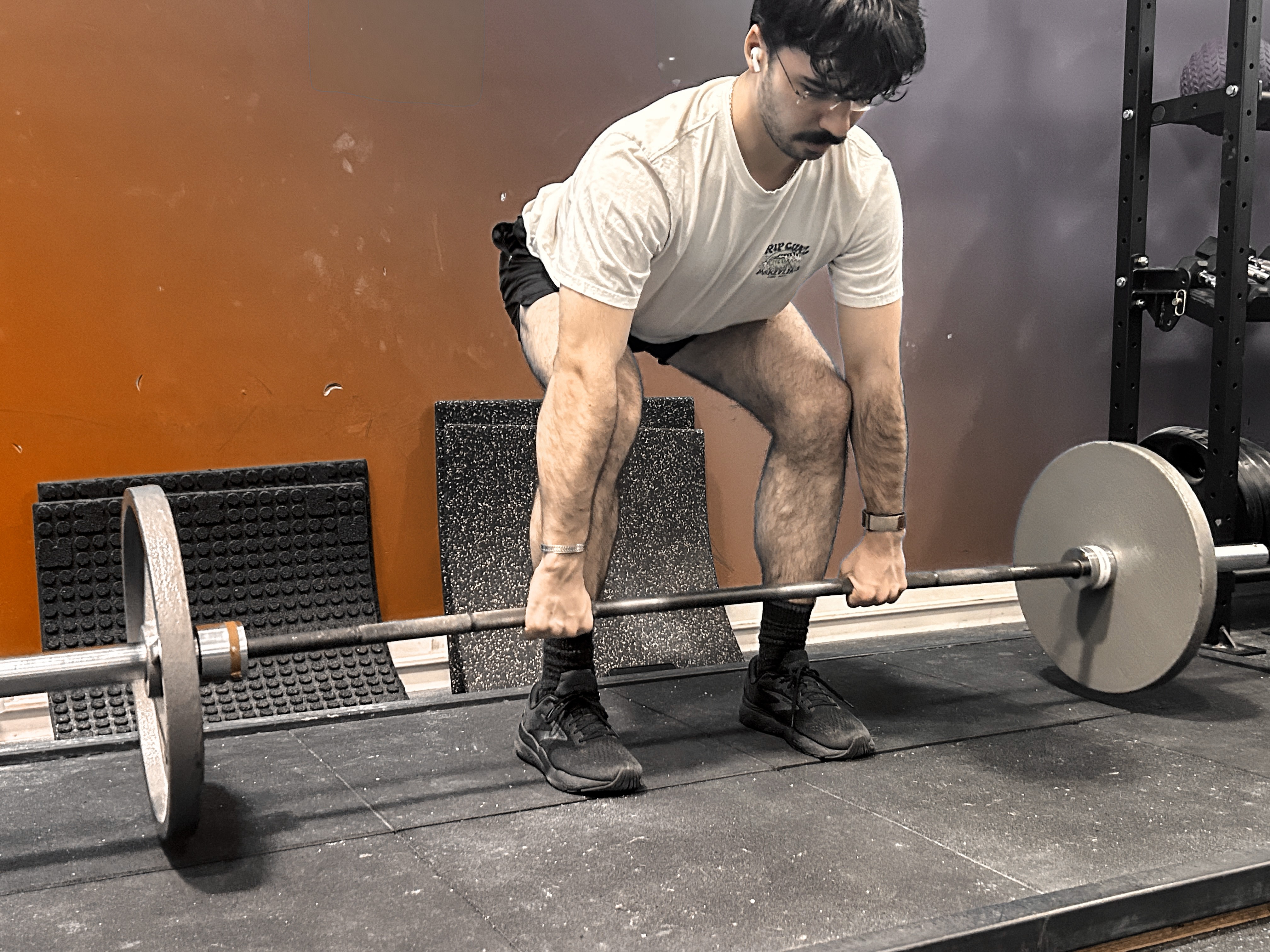
Deadlift: Whether conventional or sumo, start with light enough loads to groove a strong hip hinge and neutral spine. Pulling from a slight deficit (e.g., from blocks) once technique is solid can improve strength later.
Across all three lifts, prioritize form and full range of motion before pushing volume or intensity. Barbell lifts are unforgiving of sloppy mechanics, and early investment here pays dividends down the line.
How to Organize SBD in a Program
There are multiple effective ways to structure your training depending on goals and available time.
Frequency & Ordering
- One lift per session: Great for beginners or when training time is limited.
- Combined SBD days: Training squat, bench, and deadlift in one session can build fatigue management and lift sequencing skill, especially for powerlifting preparation.
- Weekly splits: A classic approach is to spread the Big 3 across the week—squat early in the week, bench midweek, deadlift later—to balance recovery with frequency.
Progression Models
- Linear progression: Add small weights each session—especially for newer lifters.
- Double progression: Increase reps first, then add weight once you hit your target rep range.
- Periodization: Plan waves of intensity and volume, alternating heavier and lighter weeks to prevent burnout.
Accessory work should support your main lifts—think glute/bracing work on squat days, upper back stability on bench days, and hamstring/hip hinge strength on deadlift days. Tailoring accessory choices to your weak points accelerates progress.
Advanced Techniques and Progression
Once the basics are solid, you can refine your barbell mastery with:
- Variations: Paused squats, deficit deadlifts, close-grip bench, and tempo work sharpen specific sticking points.
- Periodization plans: Conjugate, block, or daily undulating models help advanced lifters navigate strength plateaus and reduce overuse risk.
- Auto-regulation: Tools like Rate of Perceived Exertion (RPE) help adjust loads daily based on readiness and recovery.
These advanced tools keep training challenging while respecting recovery.
Benefits
- Strength and muscle: Heavy barbell work stimulates broad neuromuscular recruitment, crucial for maximal strength.
- Efficient programming: You don’t need dozens of exercises to build a powerful, balanced body—the Big 3 do heavy lifting for you.
- Progress tracking: Incremental progress is straightforward to monitor.
Potential Drawbacks
- Complex mechanics: Squat and deadlift technique can take weeks to master—inefficiencies raise injury risk without proper coaching or self-feedback.
- Recovery demand: Heavy barbell training stresses the nervous system; without smart programming, fatigue can accumulate.
- Not ideal for every goal: If hypertrophy or aesthetic goals dominate and joint issues exist, some lifters pair barbell work with machines or alternative movements for balance.
In Practice
If your goal is strength, start with the Big 3 as your foundation. New lifters can see rapid returns by improving technique and adding weight regularly. As you become more advanced, mix variations and adjust volume/intensity cycles to keep challenging your body without overreaching.
Ultimately, mastering the barbell isn’t just about moving heavy iron—it’s about organizing stress, technique, and recovery in a way that supports consistent, long-term progress. Choose exercises and programming that align with your goals and respects your recovery, and you’ll build both strength and confidence beneath the bar.
Sources & Resources
- Traditional Strength - Why Traditional Strength Training Works: The Benefits of Barbells
- NIH, PubMed, Deakin University, University of Sydney, Australian Catholic University, University of Queensland - Long-Term Adaptations in the Squat, Bench Press, and Deadlift: Assessing Strength Gain in Powerlifting Athletes
- Powerlifting.com - A Practical Guide to Training Squat, Bench, and Deadlift in One Session on SBD Days
- Science Direct: Time course of recovery is similar for the back squat, bench press, and deadlift in well-trained males


SBD: How and Why You Should Master the Barbell
The “Big 3”—Squat, Bench Press, and Deadlift—are foundational barbell compound exercises. They’re not just staples of powerlifting; they’re among the most effective movements for building raw strength, muscular coordination, and full-body resilience. Understanding why they matter and how to organize them in a program can genuinely transform your training.
Technique Tips
Beginner
Why Do Barbell Compound Exercises?
Barbell squats, bench presses, and deadlifts simultaneously load multiple major muscle groups, making them highly efficient for strength and muscle development. They allow you to handle heavy weights that engage both prime movers and stabilizers. This broad recruitment leads to more coordinated force production and impressive neuromuscular adaptations compared with many isolation movements.
These lifts also lend themselves to progressive overload—the cornerstone of strength gains. Adding small increments of weight, reps, or sets over time forces adaptation. Barbells make this predictable and trackable, and research shows strength improvements are measurable over long training cycles with consistent overload strategies.
Other benefits include:
- Functional strength: the patterns mimic real-world movements like pushing, squatting, and lifting off the ground.
- Time efficiency: hitting many muscles in one movement saves time compared with isolated lifts.
- High metabolic demand: heavy compounds elevate energy expenditure more than single-joint exercises.
Starting Out: Squat, Bench, Deadlift
When you’re new to barbell training, technique and consistency come before heavy loading.
Squat: Start with a foundational version (e.g., high-bar back squat) and focus on balance, hip and ankle mobility, and a stable bracing pattern. Working through accessible progressions (e.g., goblet squats or box squats) helps establish correct mechanics before loading heavily.
Bench Press: Learn scapular control and stable shoulder positioning first. Setting your back tight on the bench and maintaining a consistent bar path cultivates safety and strength. Beginners often benefit from paused reps to reinforce control.
Deadlift: Whether conventional or sumo, start with light enough loads to groove a strong hip hinge and neutral spine. Pulling from a slight deficit (e.g., from blocks) once technique is solid can improve strength later.
Across all three lifts, prioritize form and full range of motion before pushing volume or intensity. Barbell lifts are unforgiving of sloppy mechanics, and early investment here pays dividends down the line.
How to Organize SBD in a Program
There are multiple effective ways to structure your training depending on goals and available time.
Frequency & Ordering
- One lift per session: Great for beginners or when training time is limited.
- Combined SBD days: Training squat, bench, and deadlift in one session can build fatigue management and lift sequencing skill, especially for powerlifting preparation.
- Weekly splits: A classic approach is to spread the Big 3 across the week—squat early in the week, bench midweek, deadlift later—to balance recovery with frequency.
Progression Models
- Linear progression: Add small weights each session—especially for newer lifters.
- Double progression: Increase reps first, then add weight once you hit your target rep range.
- Periodization: Plan waves of intensity and volume, alternating heavier and lighter weeks to prevent burnout.
Accessory work should support your main lifts—think glute/bracing work on squat days, upper back stability on bench days, and hamstring/hip hinge strength on deadlift days. Tailoring accessory choices to your weak points accelerates progress.
Advanced Techniques and Progression
Once the basics are solid, you can refine your barbell mastery with:
- Variations: Paused squats, deficit deadlifts, close-grip bench, and tempo work sharpen specific sticking points.
- Periodization plans: Conjugate, block, or daily undulating models help advanced lifters navigate strength plateaus and reduce overuse risk.
- Auto-regulation: Tools like Rate of Perceived Exertion (RPE) help adjust loads daily based on readiness and recovery.
These advanced tools keep training challenging while respecting recovery.
Benefits
- Strength and muscle: Heavy barbell work stimulates broad neuromuscular recruitment, crucial for maximal strength.
- Efficient programming: You don’t need dozens of exercises to build a powerful, balanced body—the Big 3 do heavy lifting for you.
- Progress tracking: Incremental progress is straightforward to monitor.
Potential Drawbacks
- Complex mechanics: Squat and deadlift technique can take weeks to master—inefficiencies raise injury risk without proper coaching or self-feedback.
- Recovery demand: Heavy barbell training stresses the nervous system; without smart programming, fatigue can accumulate.
- Not ideal for every goal: If hypertrophy or aesthetic goals dominate and joint issues exist, some lifters pair barbell work with machines or alternative movements for balance.
In Practice
If your goal is strength, start with the Big 3 as your foundation. New lifters can see rapid returns by improving technique and adding weight regularly. As you become more advanced, mix variations and adjust volume/intensity cycles to keep challenging your body without overreaching.
Ultimately, mastering the barbell isn’t just about moving heavy iron—it’s about organizing stress, technique, and recovery in a way that supports consistent, long-term progress. Choose exercises and programming that align with your goals and respects your recovery, and you’ll build both strength and confidence beneath the bar.
Sources & Resources
- Traditional Strength - Why Traditional Strength Training Works: The Benefits of Barbells
- NIH, PubMed, Deakin University, University of Sydney, Australian Catholic University, University of Queensland - Long-Term Adaptations in the Squat, Bench Press, and Deadlift: Assessing Strength Gain in Powerlifting Athletes
- Powerlifting.com - A Practical Guide to Training Squat, Bench, and Deadlift in One Session on SBD Days
- Science Direct: Time course of recovery is similar for the back squat, bench press, and deadlift in well-trained males

SBD: How and Why You Should Master the Barbell
The “Big 3”—Squat, Bench Press, and Deadlift—are foundational barbell compound exercises. They’re not just staples of powerlifting; they’re among the most effective movements for building raw strength, muscular coordination, and full-body resilience. Understanding why they matter and how to organize them in a program can genuinely transform your training.
Technique Tips
Beginner
Why Do Barbell Compound Exercises?
Barbell squats, bench presses, and deadlifts simultaneously load multiple major muscle groups, making them highly efficient for strength and muscle development. They allow you to handle heavy weights that engage both prime movers and stabilizers. This broad recruitment leads to more coordinated force production and impressive neuromuscular adaptations compared with many isolation movements.
These lifts also lend themselves to progressive overload—the cornerstone of strength gains. Adding small increments of weight, reps, or sets over time forces adaptation. Barbells make this predictable and trackable, and research shows strength improvements are measurable over long training cycles with consistent overload strategies.
Other benefits include:
- Functional strength: the patterns mimic real-world movements like pushing, squatting, and lifting off the ground.
- Time efficiency: hitting many muscles in one movement saves time compared with isolated lifts.
- High metabolic demand: heavy compounds elevate energy expenditure more than single-joint exercises.
Starting Out: Squat, Bench, Deadlift
When you’re new to barbell training, technique and consistency come before heavy loading.
Squat: Start with a foundational version (e.g., high-bar back squat) and focus on balance, hip and ankle mobility, and a stable bracing pattern. Working through accessible progressions (e.g., goblet squats or box squats) helps establish correct mechanics before loading heavily.
Bench Press: Learn scapular control and stable shoulder positioning first. Setting your back tight on the bench and maintaining a consistent bar path cultivates safety and strength. Beginners often benefit from paused reps to reinforce control.
Deadlift: Whether conventional or sumo, start with light enough loads to groove a strong hip hinge and neutral spine. Pulling from a slight deficit (e.g., from blocks) once technique is solid can improve strength later.
Across all three lifts, prioritize form and full range of motion before pushing volume or intensity. Barbell lifts are unforgiving of sloppy mechanics, and early investment here pays dividends down the line.
How to Organize SBD in a Program
There are multiple effective ways to structure your training depending on goals and available time.
Frequency & Ordering
- One lift per session: Great for beginners or when training time is limited.
- Combined SBD days: Training squat, bench, and deadlift in one session can build fatigue management and lift sequencing skill, especially for powerlifting preparation.
- Weekly splits: A classic approach is to spread the Big 3 across the week—squat early in the week, bench midweek, deadlift later—to balance recovery with frequency.
Progression Models
- Linear progression: Add small weights each session—especially for newer lifters.
- Double progression: Increase reps first, then add weight once you hit your target rep range.
- Periodization: Plan waves of intensity and volume, alternating heavier and lighter weeks to prevent burnout.
Accessory work should support your main lifts—think glute/bracing work on squat days, upper back stability on bench days, and hamstring/hip hinge strength on deadlift days. Tailoring accessory choices to your weak points accelerates progress.
Advanced Techniques and Progression
Once the basics are solid, you can refine your barbell mastery with:
- Variations: Paused squats, deficit deadlifts, close-grip bench, and tempo work sharpen specific sticking points.
- Periodization plans: Conjugate, block, or daily undulating models help advanced lifters navigate strength plateaus and reduce overuse risk.
- Auto-regulation: Tools like Rate of Perceived Exertion (RPE) help adjust loads daily based on readiness and recovery.
These advanced tools keep training challenging while respecting recovery.
Benefits
- Strength and muscle: Heavy barbell work stimulates broad neuromuscular recruitment, crucial for maximal strength.
- Efficient programming: You don’t need dozens of exercises to build a powerful, balanced body—the Big 3 do heavy lifting for you.
- Progress tracking: Incremental progress is straightforward to monitor.
Potential Drawbacks
- Complex mechanics: Squat and deadlift technique can take weeks to master—inefficiencies raise injury risk without proper coaching or self-feedback.
- Recovery demand: Heavy barbell training stresses the nervous system; without smart programming, fatigue can accumulate.
- Not ideal for every goal: If hypertrophy or aesthetic goals dominate and joint issues exist, some lifters pair barbell work with machines or alternative movements for balance.
In Practice
If your goal is strength, start with the Big 3 as your foundation. New lifters can see rapid returns by improving technique and adding weight regularly. As you become more advanced, mix variations and adjust volume/intensity cycles to keep challenging your body without overreaching.
Ultimately, mastering the barbell isn’t just about moving heavy iron—it’s about organizing stress, technique, and recovery in a way that supports consistent, long-term progress. Choose exercises and programming that align with your goals and respects your recovery, and you’ll build both strength and confidence beneath the bar.
Sources & Resources
- Traditional Strength - Why Traditional Strength Training Works: The Benefits of Barbells
- NIH, PubMed, Deakin University, University of Sydney, Australian Catholic University, University of Queensland - Long-Term Adaptations in the Squat, Bench Press, and Deadlift: Assessing Strength Gain in Powerlifting Athletes
- Powerlifting.com - A Practical Guide to Training Squat, Bench, and Deadlift in One Session on SBD Days
- Science Direct: Time course of recovery is similar for the back squat, bench press, and deadlift in well-trained males

SBD: How and Why You Should Master the Barbell
The “Big 3”—Squat, Bench Press, and Deadlift—are foundational barbell compound exercises. They’re not just staples of powerlifting; they’re among the most effective movements for building raw strength, muscular coordination, and full-body resilience. Understanding why they matter and how to organize them in a program can genuinely transform your training.
Technique Tips
Beginner
Why Do Barbell Compound Exercises?
Barbell squats, bench presses, and deadlifts simultaneously load multiple major muscle groups, making them highly efficient for strength and muscle development. They allow you to handle heavy weights that engage both prime movers and stabilizers. This broad recruitment leads to more coordinated force production and impressive neuromuscular adaptations compared with many isolation movements.
These lifts also lend themselves to progressive overload—the cornerstone of strength gains. Adding small increments of weight, reps, or sets over time forces adaptation. Barbells make this predictable and trackable, and research shows strength improvements are measurable over long training cycles with consistent overload strategies.
Other benefits include:
- Functional strength: the patterns mimic real-world movements like pushing, squatting, and lifting off the ground.
- Time efficiency: hitting many muscles in one movement saves time compared with isolated lifts.
- High metabolic demand: heavy compounds elevate energy expenditure more than single-joint exercises.
Starting Out: Squat, Bench, Deadlift
When you’re new to barbell training, technique and consistency come before heavy loading.
Squat: Start with a foundational version (e.g., high-bar back squat) and focus on balance, hip and ankle mobility, and a stable bracing pattern. Working through accessible progressions (e.g., goblet squats or box squats) helps establish correct mechanics before loading heavily.
Bench Press: Learn scapular control and stable shoulder positioning first. Setting your back tight on the bench and maintaining a consistent bar path cultivates safety and strength. Beginners often benefit from paused reps to reinforce control.
Deadlift: Whether conventional or sumo, start with light enough loads to groove a strong hip hinge and neutral spine. Pulling from a slight deficit (e.g., from blocks) once technique is solid can improve strength later.
Across all three lifts, prioritize form and full range of motion before pushing volume or intensity. Barbell lifts are unforgiving of sloppy mechanics, and early investment here pays dividends down the line.
How to Organize SBD in a Program
There are multiple effective ways to structure your training depending on goals and available time.
Frequency & Ordering
- One lift per session: Great for beginners or when training time is limited.
- Combined SBD days: Training squat, bench, and deadlift in one session can build fatigue management and lift sequencing skill, especially for powerlifting preparation.
- Weekly splits: A classic approach is to spread the Big 3 across the week—squat early in the week, bench midweek, deadlift later—to balance recovery with frequency.
Progression Models
- Linear progression: Add small weights each session—especially for newer lifters.
- Double progression: Increase reps first, then add weight once you hit your target rep range.
- Periodization: Plan waves of intensity and volume, alternating heavier and lighter weeks to prevent burnout.
Accessory work should support your main lifts—think glute/bracing work on squat days, upper back stability on bench days, and hamstring/hip hinge strength on deadlift days. Tailoring accessory choices to your weak points accelerates progress.
Advanced Techniques and Progression
Once the basics are solid, you can refine your barbell mastery with:
- Variations: Paused squats, deficit deadlifts, close-grip bench, and tempo work sharpen specific sticking points.
- Periodization plans: Conjugate, block, or daily undulating models help advanced lifters navigate strength plateaus and reduce overuse risk.
- Auto-regulation: Tools like Rate of Perceived Exertion (RPE) help adjust loads daily based on readiness and recovery.
These advanced tools keep training challenging while respecting recovery.
Benefits
- Strength and muscle: Heavy barbell work stimulates broad neuromuscular recruitment, crucial for maximal strength.
- Efficient programming: You don’t need dozens of exercises to build a powerful, balanced body—the Big 3 do heavy lifting for you.
- Progress tracking: Incremental progress is straightforward to monitor.
Potential Drawbacks
- Complex mechanics: Squat and deadlift technique can take weeks to master—inefficiencies raise injury risk without proper coaching or self-feedback.
- Recovery demand: Heavy barbell training stresses the nervous system; without smart programming, fatigue can accumulate.
- Not ideal for every goal: If hypertrophy or aesthetic goals dominate and joint issues exist, some lifters pair barbell work with machines or alternative movements for balance.
In Practice
If your goal is strength, start with the Big 3 as your foundation. New lifters can see rapid returns by improving technique and adding weight regularly. As you become more advanced, mix variations and adjust volume/intensity cycles to keep challenging your body without overreaching.
Ultimately, mastering the barbell isn’t just about moving heavy iron—it’s about organizing stress, technique, and recovery in a way that supports consistent, long-term progress. Choose exercises and programming that align with your goals and respects your recovery, and you’ll build both strength and confidence beneath the bar.
Sources & Resources
- Traditional Strength - Why Traditional Strength Training Works: The Benefits of Barbells
- NIH, PubMed, Deakin University, University of Sydney, Australian Catholic University, University of Queensland - Long-Term Adaptations in the Squat, Bench Press, and Deadlift: Assessing Strength Gain in Powerlifting Athletes
- Powerlifting.com - A Practical Guide to Training Squat, Bench, and Deadlift in One Session on SBD Days
- Science Direct: Time course of recovery is similar for the back squat, bench press, and deadlift in well-trained males