
Advanced Techniques: Drop Sets, Myo-Reps, and Lengthened Partials
At some point in training, adding more sets or more weight stops being the most effective lever. Time becomes limited, recovery becomes precious, and progress requires smarter ways to apply stress. Advanced techniques like drop sets, myo-reps, and lengthened partials exist to do exactly that: increase training stimulus without simply doing more work. These tools can be powerful when used intentionally.
Technique Tips
Advanced
What Makes a Technique “Advanced”?
These methods:
- Increase local muscular fatigue quickly
- Push sets closer to true failure and for longer
- Create high mechanical tension and metabolic stress
That also means they:
- Demand solid technique
- Require good recovery
- Are best layered on top of a strong training foundation
They’re not shortcuts for beginners. They’re refinements for lifters who already know how to train hard, and often the best justification for using them can be to save time.
Drop Sets: Extending Effort Past Failure
A drop set involves performing a set close to failure, then immediately reducing the load and continuing the set with little or no rest, typically no more than 3 seconds. You can do a single drop set and call it a day or as many as you like until you can’t perform a single rep of even 0 weight. Selectorized machines and cables are efficient ways to do drop sets as you can quickly move the pin up on the weight stack; drop sets don’t work as well with plate-loaded barbells.
Why they work: drop sets prolong time under tension and increase metabolic stress, both of which are associated with hypertrophy. They also allow you to continue recruiting muscle fibers after stronger fibers fatigue.
When to use them
- Toward the end of a workout
- On isolation or machine-based exercises
- When time is limited
Tradeoffs
- High fatigue relative to volume
- Poor choice for heavy compound lifts
- Easy to overuse
Drop sets are efficient, but they’re blunt tools. Think intensity amplifier, not default programming.
Myo-Reps: High Stimulus, Minimal Waste
Myo-reps start with one activation set taken close to failure, followed by short rest mini-sets, typically 3–5 reps with 5–10 seconds rest, until performance drops off.
Why they work: once high-threshold motor units are recruited in the activation set, myo-reps repeatedly stimulate those fibers with minimal additional volume. This creates a strong hypertrophy signal with less total work.
Benefits
- Extremely time-efficient
- Excellent stimulus-to-fatigue ratio
Best uses
- Isolation exercises
- Accessories after compounds
- When managing joint stress or recovery
Myo-reps reward discipline. Stop when reps slow or form degrades, not when discomfort peaks.
Lengthened Partials: Biasing the Hardest Range
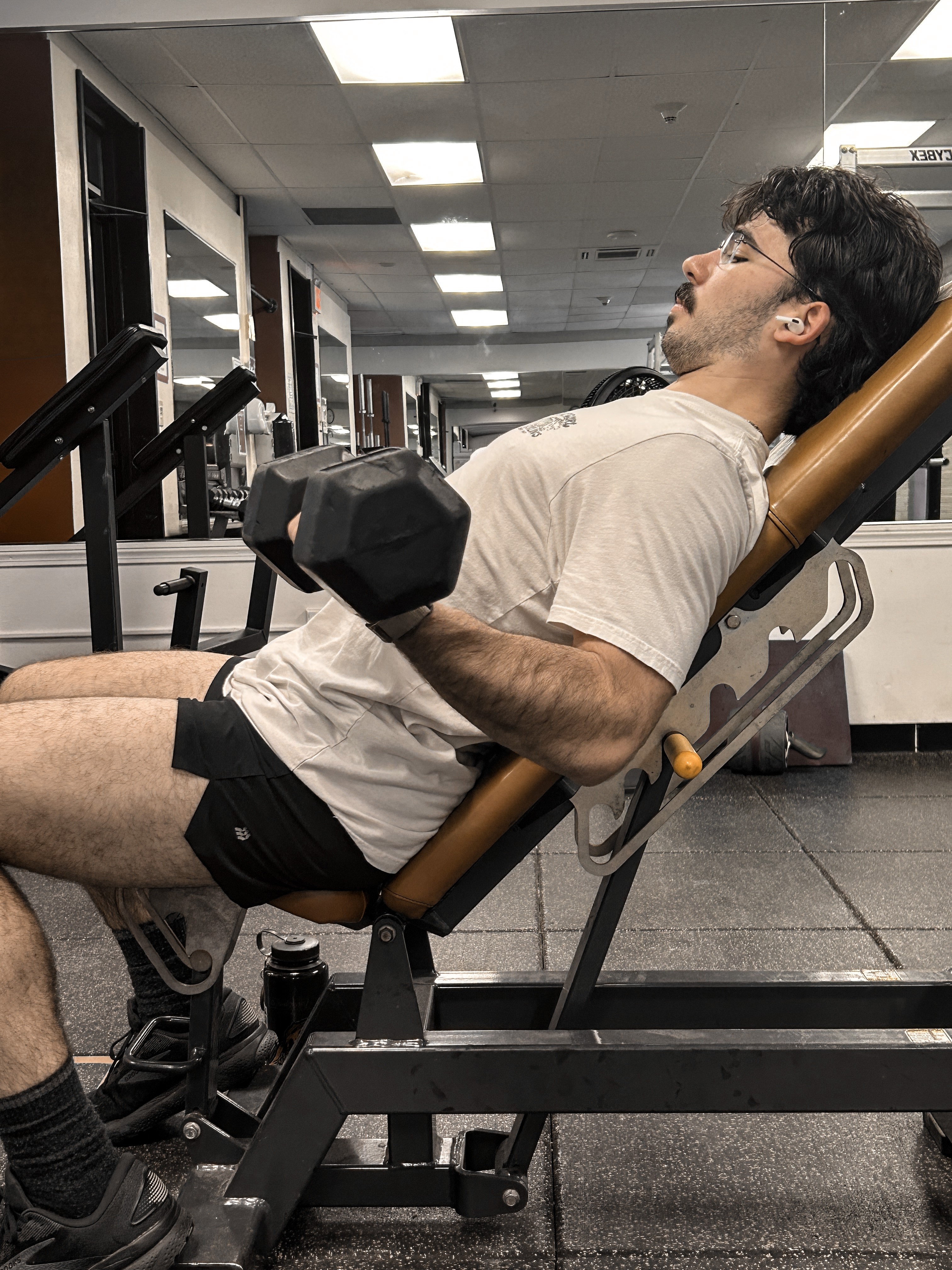
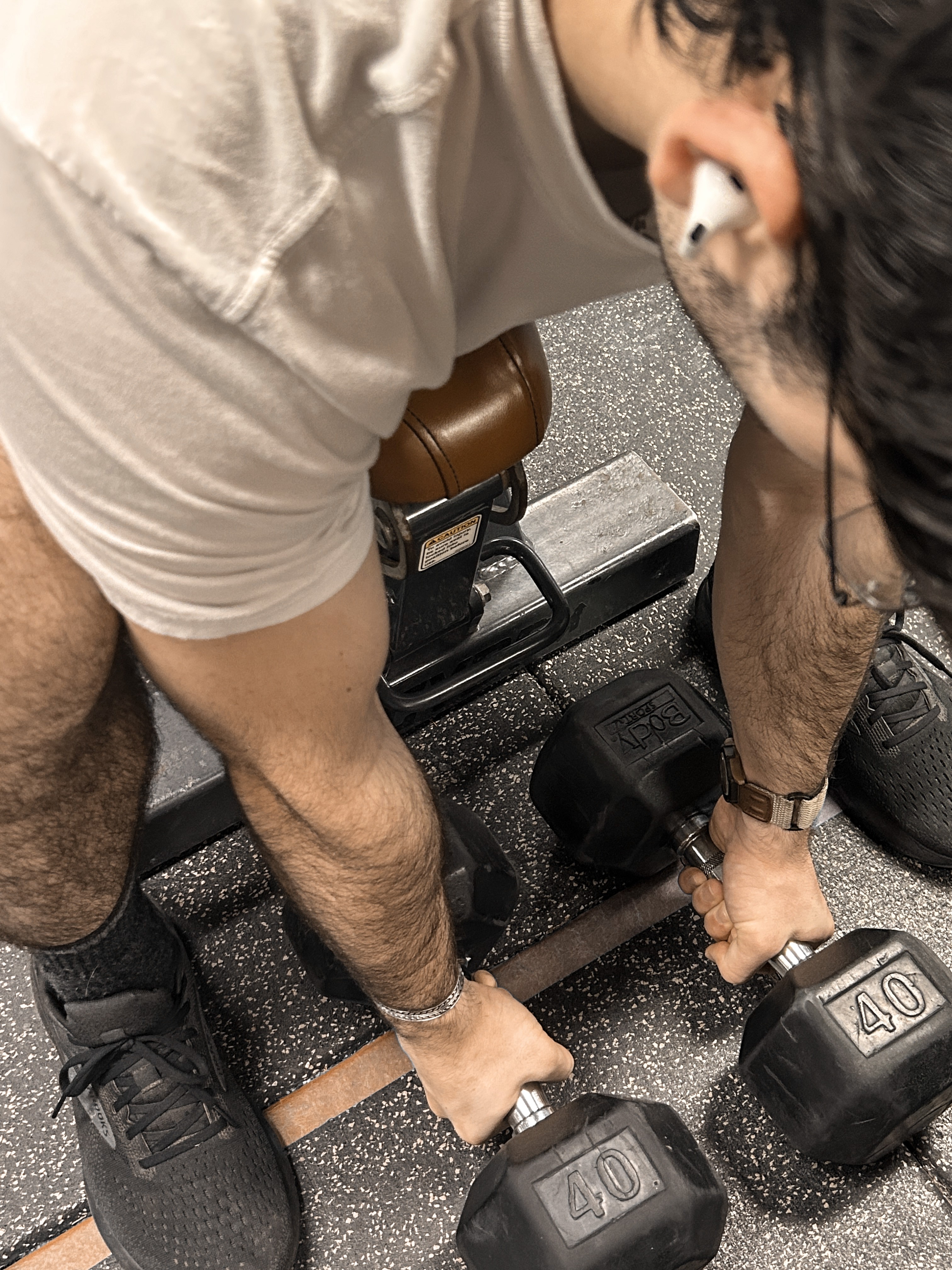
Lengthened partials involve performing partial reps in the stretched position of a movement, where the muscle is long and under high tension.
Why they work: recent research shows that hypertrophy is strongly driven by mechanical tension in the lengthened range. Muscles often experience the highest force demands there.
Examples
- Partial squats at the bottom
- Lengthened dumbbell curls from a dead hang
- Bottom-half leg presses
Benefits
- High mechanical tension
- Strong hypertrophy stimulus
- Often requires lighter loads
Cautions
- Increased muscle damage
- Longer recovery times
- Should be used sparingly
Lengthened partials are potent. They’re best treated like a seasoning, not the main course.
How (and When) to Use These Techniques
These methods work best when:
- Applied to the last set of an exercise
- Used on accessories, not main lifts
- Cycled in short phases (2–4 weeks)
- Balanced with adequate recovery
They are not meant to replace:
- Progressive overload
- Good exercise selection
- Sound programming
Advanced techniques enhance a program, they don’t fix a broken one.
Common Mistakes
- Using them on every exercise
- Training to failure constantly
- Applying them to heavy compound lifts
- Ignoring recovery signals
More intensity is not automatically better. Precision matters.
Drop sets, myo-reps, and lengthened partials are tools for focused overload, not constant escalation. When layered onto solid fundamentals, they can drive new growth, save time, and break plateaus. Used recklessly, they simply accelerate fatigue. You may have heard the phrase “time under tension;” this refers to the fact that engaging a muscle for longer, especially close to failure, will produce more stimulus and fatigue. These three strategies are all ways to drive more growth by keeping muscles closer to failure for longer.
Sources & Resources
- International Journal of Strength and Conditioning - Resistance Training Recommendations to Maximize Muscle Hypertrophy in an Athletic Population: Position Stand of the IUSCA
- International Journal of Strength and Conditioning - Partial Vs Full Range of Motion Resistance Training: A Systematic Review and Meta-Analysis
- International Journal of Strength and Conditioning - Muscular Adaptations in Drop Set vs. Traditional Training: A meta-analysis
- International Journal of Strength and Conditioning - The Effect of Resistance Training Proximity to Failure on Muscular Adaptations and Longitudinal Fatigue in Trained Men
- PubMed, NIH, City University of New York, STRCNG Incorporated OA Jeff Nippard Fitness, The Robert Gordon University - Lengthened partial repetitions elicit similar muscular adaptations as full range of motion repetitions during resistance training in trained individuals
- RP Strength - Back Hypertrophy Training Tips


Advanced Techniques: Drop Sets, Myo-Reps, and Lengthened Partials
At some point in training, adding more sets or more weight stops being the most effective lever. Time becomes limited, recovery becomes precious, and progress requires smarter ways to apply stress. Advanced techniques like drop sets, myo-reps, and lengthened partials exist to do exactly that: increase training stimulus without simply doing more work. These tools can be powerful when used intentionally.
Technique Tips
Advanced
What Makes a Technique “Advanced”?
These methods:
- Increase local muscular fatigue quickly
- Push sets closer to true failure and for longer
- Create high mechanical tension and metabolic stress
That also means they:
- Demand solid technique
- Require good recovery
- Are best layered on top of a strong training foundation
They’re not shortcuts for beginners. They’re refinements for lifters who already know how to train hard, and often the best justification for using them can be to save time.
Drop Sets: Extending Effort Past Failure
A drop set involves performing a set close to failure, then immediately reducing the load and continuing the set with little or no rest, typically no more than 3 seconds. You can do a single drop set and call it a day or as many as you like until you can’t perform a single rep of even 0 weight. Selectorized machines and cables are efficient ways to do drop sets as you can quickly move the pin up on the weight stack; drop sets don’t work as well with plate-loaded barbells.
Why they work: drop sets prolong time under tension and increase metabolic stress, both of which are associated with hypertrophy. They also allow you to continue recruiting muscle fibers after stronger fibers fatigue.
When to use them
- Toward the end of a workout
- On isolation or machine-based exercises
- When time is limited
Tradeoffs
- High fatigue relative to volume
- Poor choice for heavy compound lifts
- Easy to overuse
Drop sets are efficient, but they’re blunt tools. Think intensity amplifier, not default programming.
Myo-Reps: High Stimulus, Minimal Waste
Myo-reps start with one activation set taken close to failure, followed by short rest mini-sets, typically 3–5 reps with 5–10 seconds rest, until performance drops off.
Why they work: once high-threshold motor units are recruited in the activation set, myo-reps repeatedly stimulate those fibers with minimal additional volume. This creates a strong hypertrophy signal with less total work.
Benefits
- Extremely time-efficient
- Excellent stimulus-to-fatigue ratio
Best uses
- Isolation exercises
- Accessories after compounds
- When managing joint stress or recovery
Myo-reps reward discipline. Stop when reps slow or form degrades, not when discomfort peaks.
Lengthened Partials: Biasing the Hardest Range
Lengthened partials involve performing partial reps in the stretched position of a movement, where the muscle is long and under high tension.
Why they work: recent research shows that hypertrophy is strongly driven by mechanical tension in the lengthened range. Muscles often experience the highest force demands there.
Examples
- Partial squats at the bottom
- Lengthened dumbbell curls from a dead hang
- Bottom-half leg presses
Benefits
- High mechanical tension
- Strong hypertrophy stimulus
- Often requires lighter loads
Cautions
- Increased muscle damage
- Longer recovery times
- Should be used sparingly
Lengthened partials are potent. They’re best treated like a seasoning, not the main course.
How (and When) to Use These Techniques
These methods work best when:
- Applied to the last set of an exercise
- Used on accessories, not main lifts
- Cycled in short phases (2–4 weeks)
- Balanced with adequate recovery
They are not meant to replace:
- Progressive overload
- Good exercise selection
- Sound programming
Advanced techniques enhance a program, they don’t fix a broken one.
Common Mistakes
- Using them on every exercise
- Training to failure constantly
- Applying them to heavy compound lifts
- Ignoring recovery signals
More intensity is not automatically better. Precision matters.
Drop sets, myo-reps, and lengthened partials are tools for focused overload, not constant escalation. When layered onto solid fundamentals, they can drive new growth, save time, and break plateaus. Used recklessly, they simply accelerate fatigue. You may have heard the phrase “time under tension;” this refers to the fact that engaging a muscle for longer, especially close to failure, will produce more stimulus and fatigue. These three strategies are all ways to drive more growth by keeping muscles closer to failure for longer.
Sources & Resources
- International Journal of Strength and Conditioning - Resistance Training Recommendations to Maximize Muscle Hypertrophy in an Athletic Population: Position Stand of the IUSCA
- International Journal of Strength and Conditioning - Partial Vs Full Range of Motion Resistance Training: A Systematic Review and Meta-Analysis
- International Journal of Strength and Conditioning - Muscular Adaptations in Drop Set vs. Traditional Training: A meta-analysis
- International Journal of Strength and Conditioning - The Effect of Resistance Training Proximity to Failure on Muscular Adaptations and Longitudinal Fatigue in Trained Men
- PubMed, NIH, City University of New York, STRCNG Incorporated OA Jeff Nippard Fitness, The Robert Gordon University - Lengthened partial repetitions elicit similar muscular adaptations as full range of motion repetitions during resistance training in trained individuals
- RP Strength - Back Hypertrophy Training Tips

Advanced Techniques: Drop Sets, Myo-Reps, and Lengthened Partials
At some point in training, adding more sets or more weight stops being the most effective lever. Time becomes limited, recovery becomes precious, and progress requires smarter ways to apply stress. Advanced techniques like drop sets, myo-reps, and lengthened partials exist to do exactly that: increase training stimulus without simply doing more work. These tools can be powerful when used intentionally.
Technique Tips
Advanced
What Makes a Technique “Advanced”?
These methods:
- Increase local muscular fatigue quickly
- Push sets closer to true failure and for longer
- Create high mechanical tension and metabolic stress
That also means they:
- Demand solid technique
- Require good recovery
- Are best layered on top of a strong training foundation
They’re not shortcuts for beginners. They’re refinements for lifters who already know how to train hard, and often the best justification for using them can be to save time.
Drop Sets: Extending Effort Past Failure
A drop set involves performing a set close to failure, then immediately reducing the load and continuing the set with little or no rest, typically no more than 3 seconds. You can do a single drop set and call it a day or as many as you like until you can’t perform a single rep of even 0 weight. Selectorized machines and cables are efficient ways to do drop sets as you can quickly move the pin up on the weight stack; drop sets don’t work as well with plate-loaded barbells.
Why they work: drop sets prolong time under tension and increase metabolic stress, both of which are associated with hypertrophy. They also allow you to continue recruiting muscle fibers after stronger fibers fatigue.
When to use them
- Toward the end of a workout
- On isolation or machine-based exercises
- When time is limited
Tradeoffs
- High fatigue relative to volume
- Poor choice for heavy compound lifts
- Easy to overuse
Drop sets are efficient, but they’re blunt tools. Think intensity amplifier, not default programming.
Myo-Reps: High Stimulus, Minimal Waste
Myo-reps start with one activation set taken close to failure, followed by short rest mini-sets, typically 3–5 reps with 5–10 seconds rest, until performance drops off.
Why they work: once high-threshold motor units are recruited in the activation set, myo-reps repeatedly stimulate those fibers with minimal additional volume. This creates a strong hypertrophy signal with less total work.
Benefits
- Extremely time-efficient
- Excellent stimulus-to-fatigue ratio
Best uses
- Isolation exercises
- Accessories after compounds
- When managing joint stress or recovery
Myo-reps reward discipline. Stop when reps slow or form degrades, not when discomfort peaks.
Lengthened Partials: Biasing the Hardest Range
Lengthened partials involve performing partial reps in the stretched position of a movement, where the muscle is long and under high tension.
Why they work: recent research shows that hypertrophy is strongly driven by mechanical tension in the lengthened range. Muscles often experience the highest force demands there.
Examples
- Partial squats at the bottom
- Lengthened dumbbell curls from a dead hang
- Bottom-half leg presses
Benefits
- High mechanical tension
- Strong hypertrophy stimulus
- Often requires lighter loads
Cautions
- Increased muscle damage
- Longer recovery times
- Should be used sparingly
Lengthened partials are potent. They’re best treated like a seasoning, not the main course.
How (and When) to Use These Techniques
These methods work best when:
- Applied to the last set of an exercise
- Used on accessories, not main lifts
- Cycled in short phases (2–4 weeks)
- Balanced with adequate recovery
They are not meant to replace:
- Progressive overload
- Good exercise selection
- Sound programming
Advanced techniques enhance a program, they don’t fix a broken one.
Common Mistakes
- Using them on every exercise
- Training to failure constantly
- Applying them to heavy compound lifts
- Ignoring recovery signals
More intensity is not automatically better. Precision matters.
Drop sets, myo-reps, and lengthened partials are tools for focused overload, not constant escalation. When layered onto solid fundamentals, they can drive new growth, save time, and break plateaus. Used recklessly, they simply accelerate fatigue. You may have heard the phrase “time under tension;” this refers to the fact that engaging a muscle for longer, especially close to failure, will produce more stimulus and fatigue. These three strategies are all ways to drive more growth by keeping muscles closer to failure for longer.
Sources & Resources
- International Journal of Strength and Conditioning - Resistance Training Recommendations to Maximize Muscle Hypertrophy in an Athletic Population: Position Stand of the IUSCA
- International Journal of Strength and Conditioning - Partial Vs Full Range of Motion Resistance Training: A Systematic Review and Meta-Analysis
- International Journal of Strength and Conditioning - Muscular Adaptations in Drop Set vs. Traditional Training: A meta-analysis
- International Journal of Strength and Conditioning - The Effect of Resistance Training Proximity to Failure on Muscular Adaptations and Longitudinal Fatigue in Trained Men
- PubMed, NIH, City University of New York, STRCNG Incorporated OA Jeff Nippard Fitness, The Robert Gordon University - Lengthened partial repetitions elicit similar muscular adaptations as full range of motion repetitions during resistance training in trained individuals
- RP Strength - Back Hypertrophy Training Tips

Advanced Techniques: Drop Sets, Myo-Reps, and Lengthened Partials
At some point in training, adding more sets or more weight stops being the most effective lever. Time becomes limited, recovery becomes precious, and progress requires smarter ways to apply stress. Advanced techniques like drop sets, myo-reps, and lengthened partials exist to do exactly that: increase training stimulus without simply doing more work. These tools can be powerful when used intentionally.
Technique Tips
Beginner
What Makes a Technique “Advanced”?
These methods:
- Increase local muscular fatigue quickly
- Push sets closer to true failure and for longer
- Create high mechanical tension and metabolic stress
That also means they:
- Demand solid technique
- Require good recovery
- Are best layered on top of a strong training foundation
They’re not shortcuts for beginners. They’re refinements for lifters who already know how to train hard, and often the best justification for using them can be to save time.
Drop Sets: Extending Effort Past Failure
A drop set involves performing a set close to failure, then immediately reducing the load and continuing the set with little or no rest, typically no more than 3 seconds. You can do a single drop set and call it a day or as many as you like until you can’t perform a single rep of even 0 weight. Selectorized machines and cables are efficient ways to do drop sets as you can quickly move the pin up on the weight stack; drop sets don’t work as well with plate-loaded barbells.
Why they work: drop sets prolong time under tension and increase metabolic stress, both of which are associated with hypertrophy. They also allow you to continue recruiting muscle fibers after stronger fibers fatigue.
When to use them
- Toward the end of a workout
- On isolation or machine-based exercises
- When time is limited
Tradeoffs
- High fatigue relative to volume
- Poor choice for heavy compound lifts
- Easy to overuse
Drop sets are efficient, but they’re blunt tools. Think intensity amplifier, not default programming.
Myo-Reps: High Stimulus, Minimal Waste
Myo-reps start with one activation set taken close to failure, followed by short rest mini-sets, typically 3–5 reps with 5–10 seconds rest, until performance drops off.
Why they work: once high-threshold motor units are recruited in the activation set, myo-reps repeatedly stimulate those fibers with minimal additional volume. This creates a strong hypertrophy signal with less total work.
Benefits
- Extremely time-efficient
- Excellent stimulus-to-fatigue ratio
Best uses
- Isolation exercises
- Accessories after compounds
- When managing joint stress or recovery
Myo-reps reward discipline. Stop when reps slow or form degrades, not when discomfort peaks.
Lengthened Partials: Biasing the Hardest Range
Lengthened partials involve performing partial reps in the stretched position of a movement, where the muscle is long and under high tension.
Why they work: recent research shows that hypertrophy is strongly driven by mechanical tension in the lengthened range. Muscles often experience the highest force demands there.
Examples
- Partial squats at the bottom
- Lengthened dumbbell curls from a dead hang
- Bottom-half leg presses
Benefits
- High mechanical tension
- Strong hypertrophy stimulus
- Often requires lighter loads
Cautions
- Increased muscle damage
- Longer recovery times
- Should be used sparingly
Lengthened partials are potent. They’re best treated like a seasoning, not the main course.
How (and When) to Use These Techniques
These methods work best when:
- Applied to the last set of an exercise
- Used on accessories, not main lifts
- Cycled in short phases (2–4 weeks)
- Balanced with adequate recovery
They are not meant to replace:
- Progressive overload
- Good exercise selection
- Sound programming
Advanced techniques enhance a program, they don’t fix a broken one.
Common Mistakes
- Using them on every exercise
- Training to failure constantly
- Applying them to heavy compound lifts
- Ignoring recovery signals
More intensity is not automatically better. Precision matters.
Drop sets, myo-reps, and lengthened partials are tools for focused overload, not constant escalation. When layered onto solid fundamentals, they can drive new growth, save time, and break plateaus. Used recklessly, they simply accelerate fatigue. You may have heard the phrase “time under tension;” this refers to the fact that engaging a muscle for longer, especially close to failure, will produce more stimulus and fatigue. These three strategies are all ways to drive more growth by keeping muscles closer to failure for longer.
Sources & Resources
- International Journal of Strength and Conditioning - Resistance Training Recommendations to Maximize Muscle Hypertrophy in an Athletic Population: Position Stand of the IUSCA
- International Journal of Strength and Conditioning - Partial Vs Full Range of Motion Resistance Training: A Systematic Review and Meta-Analysis
- International Journal of Strength and Conditioning - Muscular Adaptations in Drop Set vs. Traditional Training: A meta-analysis
- International Journal of Strength and Conditioning - The Effect of Resistance Training Proximity to Failure on Muscular Adaptations and Longitudinal Fatigue in Trained Men
- PubMed, NIH, City University of New York, STRCNG Incorporated OA Jeff Nippard Fitness, The Robert Gordon University - Lengthened partial repetitions elicit similar muscular adaptations as full range of motion repetitions during resistance training in trained individuals
- RP Strength - Back Hypertrophy Training Tips