
Why Choose One Exercise Over Another That Works the Same Muscles?
At a glance, many exercises look redundant. If two movements train the same muscle group, why not just pick one and stick with it? In reality, exercise selection is about more than which muscle is involved. It’s about how that muscle is loaded, where tension is highest, how fatigue is managed, and whether the exercise keeps you engaged long enough to progress.
Exercise Science
Advanced
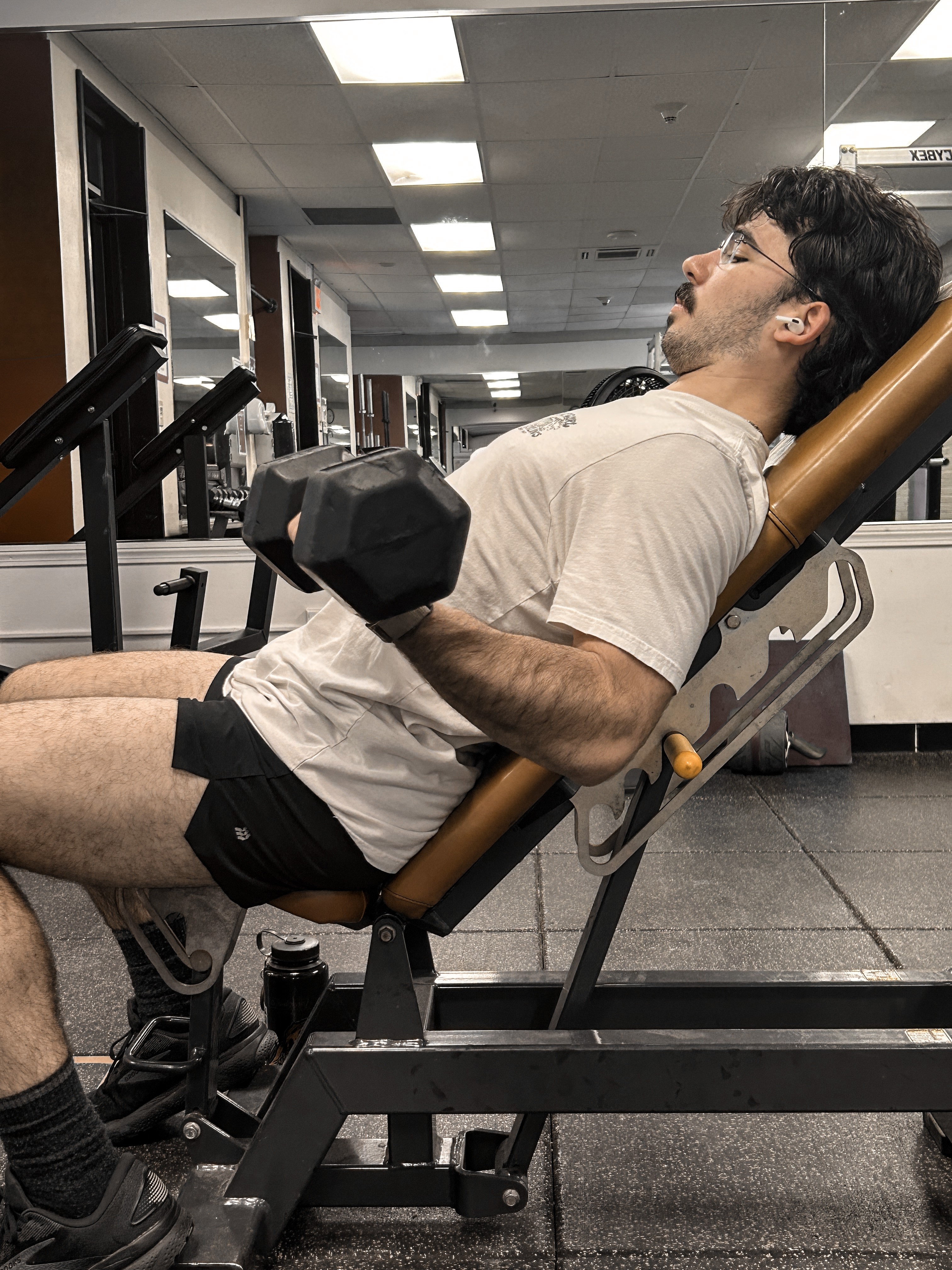

Most muscles are not single, uniform structures. They have multiple “heads” or regions, often with different fiber orientations and functions. Small changes in joint angle, arm path, or resistance direction can bias which fibers do the most work.
For example:
- The deltoid (shoulder) has anterior, lateral, and posterior heads. Lateral raises emphasize the lateral head, but the exact stimulus changes depending on where resistance is highest.
- The biceps brachii crosses both the shoulder and elbow, meaning arm position and resistance angle affect how much tension the muscle experiences.
Research using electromyography (EMG) consistently shows that altering exercise setup changes muscle activation patterns, even when the same muscle group is involved.
Why Isolation Exercises Exist
Isolation exercises tools for precision to add to compound lifts. They’re especially useful for:
- Targeting muscles that don’t get enough stimulus from compound lifts
- Reducing systemic fatigue compared to heavy multi-joint movements
- Addressing asymmetries or weak points
- Training around joint limitations or during rehab phases
From a hypertrophy perspective, isolation exercises allow you to apply meaningful tension to a specific muscle without being limited by stronger supporting muscles. When total volume and effort are matched, isolation movements can be just as effective for muscle growth as compound lifts.
Resistance Angle Matters
One of the biggest reasons to choose one exercise over another is where resistance is greatest during the movement.
Free Weights (Dumbbells & Barbells)
Free weights rely on gravity, so resistance is greatest when the lever arm is longest and drops off when the limb is closer to vertical. This means tension often decreases at the top or bottom of a movement.
Cables & Machines
Cables and machines can provide more consistent tension across the entire range of motion, or shift peak tension to positions where free weights are weakest.
Example: Lateral Raises
- Dumbbell lateral raise:
Tension is lowest at the bottom and highest around shoulder height, then drops again near the top. - Cable lateral raise:
Tension starts earlier and stays more consistent throughout the movement, often increasing time under tension for the lateral delts.
Example: Biceps Curls
- Dumbbell curl:
Peak tension occurs when the forearm is roughly parallel to the floor. - Cable curl:
Resistance can remain high throughout the entire curl, including the shortened position, depending on setup.
Neither option is universally “better,” they simply emphasize different parts of the “strength curve.”
Variety Drives Long-Term Progress
Beyond biomechanics, psychology matters. Doing the same exercises indefinitely can lead to:
- Mental fatigue and boredom
- Reduced effort and focus
- Stalled progress due to repeated exposure to the same stimulus
Rotating exercises that train the same muscle:
- Maintains novelty without abandoning structure
- Allows continued progression when one movement stalls
- Keeps training engaging, which improves consistency
From a coaching standpoint, adherence is one of the strongest predictors of long-term success. An exercise you enjoy and perform well often beats the “perfect” option you dread.
Practical Reasons to Choose One Exercise Over Another
When deciding between exercises that work the same muscles, consider:
- Which part of the muscle you want to emphasize
- Where tension is highest in the range of motion
- Joint comfort and stability
- Ability to progressively overload
- Mental engagement and enjoyment
If an exercise feels stable, pain-free, and allows steady progression, it’s likely a good choice, even if another option looks more “optimal” on paper. Exercises aren’t interchangeable just because they share a target muscle. Differences in resistance angle, tension profile, fatigue cost, and engagement all shape results. Isolation movements, cable variations, and alternative setups aren’t filler, they’re tools for precision, longevity, and sustained progress. Remember: the best exercise is the one that keeps you training hard and consistently.
Sources & Resources


Why Choose One Exercise Over Another That Works the Same Muscles?
At a glance, many exercises look redundant. If two movements train the same muscle group, why not just pick one and stick with it? In reality, exercise selection is about more than which muscle is involved. It’s about how that muscle is loaded, where tension is highest, how fatigue is managed, and whether the exercise keeps you engaged long enough to progress.
Exercise Science
Advanced
Most muscles are not single, uniform structures. They have multiple “heads” or regions, often with different fiber orientations and functions. Small changes in joint angle, arm path, or resistance direction can bias which fibers do the most work.
For example:
- The deltoid (shoulder) has anterior, lateral, and posterior heads. Lateral raises emphasize the lateral head, but the exact stimulus changes depending on where resistance is highest.
- The biceps brachii crosses both the shoulder and elbow, meaning arm position and resistance angle affect how much tension the muscle experiences.
Research using electromyography (EMG) consistently shows that altering exercise setup changes muscle activation patterns, even when the same muscle group is involved.
Why Isolation Exercises Exist
Isolation exercises tools for precision to add to compound lifts. They’re especially useful for:
- Targeting muscles that don’t get enough stimulus from compound lifts
- Reducing systemic fatigue compared to heavy multi-joint movements
- Addressing asymmetries or weak points
- Training around joint limitations or during rehab phases
From a hypertrophy perspective, isolation exercises allow you to apply meaningful tension to a specific muscle without being limited by stronger supporting muscles. When total volume and effort are matched, isolation movements can be just as effective for muscle growth as compound lifts.
Resistance Angle Matters
One of the biggest reasons to choose one exercise over another is where resistance is greatest during the movement.
Free Weights (Dumbbells & Barbells)
Free weights rely on gravity, so resistance is greatest when the lever arm is longest and drops off when the limb is closer to vertical. This means tension often decreases at the top or bottom of a movement.
Cables & Machines
Cables and machines can provide more consistent tension across the entire range of motion, or shift peak tension to positions where free weights are weakest.
Example: Lateral Raises
- Dumbbell lateral raise:
Tension is lowest at the bottom and highest around shoulder height, then drops again near the top. - Cable lateral raise:
Tension starts earlier and stays more consistent throughout the movement, often increasing time under tension for the lateral delts.
Example: Biceps Curls
- Dumbbell curl:
Peak tension occurs when the forearm is roughly parallel to the floor. - Cable curl:
Resistance can remain high throughout the entire curl, including the shortened position, depending on setup.
Neither option is universally “better,” they simply emphasize different parts of the “strength curve.”
Variety Drives Long-Term Progress
Beyond biomechanics, psychology matters. Doing the same exercises indefinitely can lead to:
- Mental fatigue and boredom
- Reduced effort and focus
- Stalled progress due to repeated exposure to the same stimulus
Rotating exercises that train the same muscle:
- Maintains novelty without abandoning structure
- Allows continued progression when one movement stalls
- Keeps training engaging, which improves consistency
From a coaching standpoint, adherence is one of the strongest predictors of long-term success. An exercise you enjoy and perform well often beats the “perfect” option you dread.
Practical Reasons to Choose One Exercise Over Another
When deciding between exercises that work the same muscles, consider:
- Which part of the muscle you want to emphasize
- Where tension is highest in the range of motion
- Joint comfort and stability
- Ability to progressively overload
- Mental engagement and enjoyment
If an exercise feels stable, pain-free, and allows steady progression, it’s likely a good choice, even if another option looks more “optimal” on paper. Exercises aren’t interchangeable just because they share a target muscle. Differences in resistance angle, tension profile, fatigue cost, and engagement all shape results. Isolation movements, cable variations, and alternative setups aren’t filler, they’re tools for precision, longevity, and sustained progress. Remember: the best exercise is the one that keeps you training hard and consistently.
Sources & Resources

Why Choose One Exercise Over Another That Works the Same Muscles?
At a glance, many exercises look redundant. If two movements train the same muscle group, why not just pick one and stick with it? In reality, exercise selection is about more than which muscle is involved. It’s about how that muscle is loaded, where tension is highest, how fatigue is managed, and whether the exercise keeps you engaged long enough to progress.
Exercise Science
Advanced
Most muscles are not single, uniform structures. They have multiple “heads” or regions, often with different fiber orientations and functions. Small changes in joint angle, arm path, or resistance direction can bias which fibers do the most work.
For example:
- The deltoid (shoulder) has anterior, lateral, and posterior heads. Lateral raises emphasize the lateral head, but the exact stimulus changes depending on where resistance is highest.
- The biceps brachii crosses both the shoulder and elbow, meaning arm position and resistance angle affect how much tension the muscle experiences.
Research using electromyography (EMG) consistently shows that altering exercise setup changes muscle activation patterns, even when the same muscle group is involved.
Why Isolation Exercises Exist
Isolation exercises tools for precision to add to compound lifts. They’re especially useful for:
- Targeting muscles that don’t get enough stimulus from compound lifts
- Reducing systemic fatigue compared to heavy multi-joint movements
- Addressing asymmetries or weak points
- Training around joint limitations or during rehab phases
From a hypertrophy perspective, isolation exercises allow you to apply meaningful tension to a specific muscle without being limited by stronger supporting muscles. When total volume and effort are matched, isolation movements can be just as effective for muscle growth as compound lifts.
Resistance Angle Matters
One of the biggest reasons to choose one exercise over another is where resistance is greatest during the movement.
Free Weights (Dumbbells & Barbells)
Free weights rely on gravity, so resistance is greatest when the lever arm is longest and drops off when the limb is closer to vertical. This means tension often decreases at the top or bottom of a movement.
Cables & Machines
Cables and machines can provide more consistent tension across the entire range of motion, or shift peak tension to positions where free weights are weakest.
Example: Lateral Raises
- Dumbbell lateral raise:
Tension is lowest at the bottom and highest around shoulder height, then drops again near the top. - Cable lateral raise:
Tension starts earlier and stays more consistent throughout the movement, often increasing time under tension for the lateral delts.
Example: Biceps Curls
- Dumbbell curl:
Peak tension occurs when the forearm is roughly parallel to the floor. - Cable curl:
Resistance can remain high throughout the entire curl, including the shortened position, depending on setup.
Neither option is universally “better,” they simply emphasize different parts of the “strength curve.”
Variety Drives Long-Term Progress
Beyond biomechanics, psychology matters. Doing the same exercises indefinitely can lead to:
- Mental fatigue and boredom
- Reduced effort and focus
- Stalled progress due to repeated exposure to the same stimulus
Rotating exercises that train the same muscle:
- Maintains novelty without abandoning structure
- Allows continued progression when one movement stalls
- Keeps training engaging, which improves consistency
From a coaching standpoint, adherence is one of the strongest predictors of long-term success. An exercise you enjoy and perform well often beats the “perfect” option you dread.
Practical Reasons to Choose One Exercise Over Another
When deciding between exercises that work the same muscles, consider:
- Which part of the muscle you want to emphasize
- Where tension is highest in the range of motion
- Joint comfort and stability
- Ability to progressively overload
- Mental engagement and enjoyment
If an exercise feels stable, pain-free, and allows steady progression, it’s likely a good choice, even if another option looks more “optimal” on paper. Exercises aren’t interchangeable just because they share a target muscle. Differences in resistance angle, tension profile, fatigue cost, and engagement all shape results. Isolation movements, cable variations, and alternative setups aren’t filler, they’re tools for precision, longevity, and sustained progress. Remember: the best exercise is the one that keeps you training hard and consistently.
Sources & Resources

Why Choose One Exercise Over Another That Works the Same Muscles?
At a glance, many exercises look redundant. If two movements train the same muscle group, why not just pick one and stick with it? In reality, exercise selection is about more than which muscle is involved. It’s about how that muscle is loaded, where tension is highest, how fatigue is managed, and whether the exercise keeps you engaged long enough to progress.
Exercise Science
Advanced
Most muscles are not single, uniform structures. They have multiple “heads” or regions, often with different fiber orientations and functions. Small changes in joint angle, arm path, or resistance direction can bias which fibers do the most work.
For example:
- The deltoid (shoulder) has anterior, lateral, and posterior heads. Lateral raises emphasize the lateral head, but the exact stimulus changes depending on where resistance is highest.
- The biceps brachii crosses both the shoulder and elbow, meaning arm position and resistance angle affect how much tension the muscle experiences.
Research using electromyography (EMG) consistently shows that altering exercise setup changes muscle activation patterns, even when the same muscle group is involved.
Why Isolation Exercises Exist
Isolation exercises tools for precision to add to compound lifts. They’re especially useful for:
- Targeting muscles that don’t get enough stimulus from compound lifts
- Reducing systemic fatigue compared to heavy multi-joint movements
- Addressing asymmetries or weak points
- Training around joint limitations or during rehab phases
From a hypertrophy perspective, isolation exercises allow you to apply meaningful tension to a specific muscle without being limited by stronger supporting muscles. When total volume and effort are matched, isolation movements can be just as effective for muscle growth as compound lifts.
Resistance Angle Matters
One of the biggest reasons to choose one exercise over another is where resistance is greatest during the movement.
Free Weights (Dumbbells & Barbells)
Free weights rely on gravity, so resistance is greatest when the lever arm is longest and drops off when the limb is closer to vertical. This means tension often decreases at the top or bottom of a movement.
Cables & Machines
Cables and machines can provide more consistent tension across the entire range of motion, or shift peak tension to positions where free weights are weakest.
Example: Lateral Raises
- Dumbbell lateral raise:
Tension is lowest at the bottom and highest around shoulder height, then drops again near the top. - Cable lateral raise:
Tension starts earlier and stays more consistent throughout the movement, often increasing time under tension for the lateral delts.
Example: Biceps Curls
- Dumbbell curl:
Peak tension occurs when the forearm is roughly parallel to the floor. - Cable curl:
Resistance can remain high throughout the entire curl, including the shortened position, depending on setup.
Neither option is universally “better,” they simply emphasize different parts of the “strength curve.”
Variety Drives Long-Term Progress
Beyond biomechanics, psychology matters. Doing the same exercises indefinitely can lead to:
- Mental fatigue and boredom
- Reduced effort and focus
- Stalled progress due to repeated exposure to the same stimulus
Rotating exercises that train the same muscle:
- Maintains novelty without abandoning structure
- Allows continued progression when one movement stalls
- Keeps training engaging, which improves consistency
From a coaching standpoint, adherence is one of the strongest predictors of long-term success. An exercise you enjoy and perform well often beats the “perfect” option you dread.
Practical Reasons to Choose One Exercise Over Another
When deciding between exercises that work the same muscles, consider:
- Which part of the muscle you want to emphasize
- Where tension is highest in the range of motion
- Joint comfort and stability
- Ability to progressively overload
- Mental engagement and enjoyment
If an exercise feels stable, pain-free, and allows steady progression, it’s likely a good choice, even if another option looks more “optimal” on paper. Exercises aren’t interchangeable just because they share a target muscle. Differences in resistance angle, tension profile, fatigue cost, and engagement all shape results. Isolation movements, cable variations, and alternative setups aren’t filler, they’re tools for precision, longevity, and sustained progress. Remember: the best exercise is the one that keeps you training hard and consistently.
Sources & Resources