
What Is Training to Failure and Why Do We Do It?
At some point in lifting, you’ll hear someone say you need to “train to failure” to make progress. Like many ideas in exercise science, failure training isn’t good or bad on its own. It’s a mechanism. Understanding why it works and when it stops working matters more than treating it as a rule.
Exercise Science
Advanced
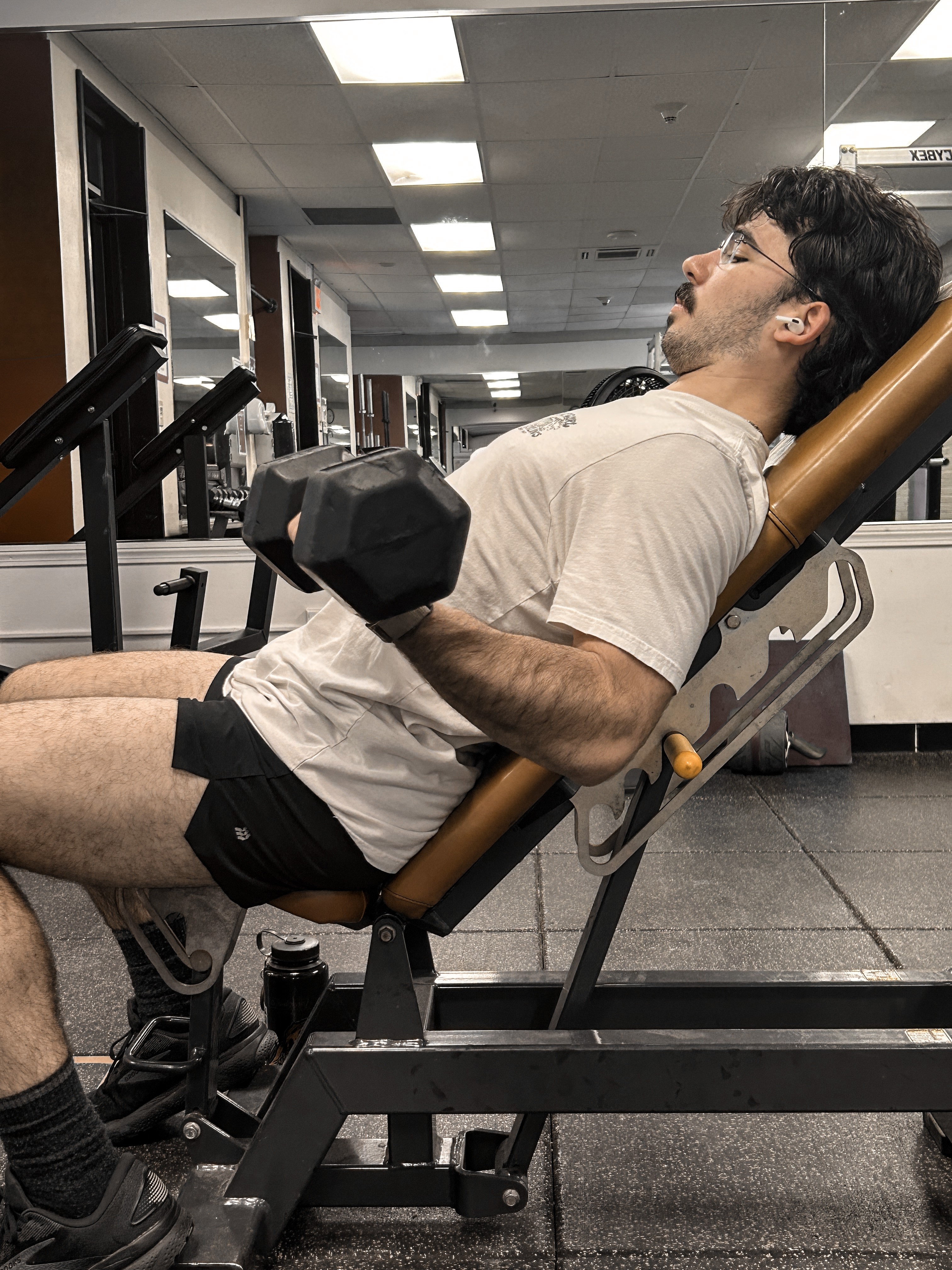

Training to failure means performing a set until you cannot complete another repetition with proper technique, even if you try. Importantly, this is momentary muscular failure, not total exhaustion or breakdown of form. There are related concepts worth distinguishing:
- True failure: no additional reps possible with correct form
- Near failure: stopping 1–3 reps short (often called Reps in Reserve, or RIR)
- Technical failure: form degrades before muscular failure is reached
Most research and effective programming focuses on near failure, not constant all-out sets.
Why Muscles Adapt in the First Place
Muscles grow and strengthen in response to mechanical tension, which is the force placed on muscle fibers when they contract against resistance. This tension disrupts homeostasis, triggering signaling pathways that lead to adaptation, provided recovery resources are available. Here’s the key insight from modern hypertrophy research: muscles don’t count reps. They respond to effective reps; the reps performed when the muscle is sufficiently challenged. As fatigue builds within a set, more motor units (including high-threshold, fast-twitch fibers) are recruited. The closer you get to failure, the more of those fibers are involved.
Why Proximity to Failure Matters
Early reps in a set often feel easier because only lower-threshold motor units are active. As fatigue accumulates:
- More motor units are recruited
- Mechanical tension per fiber increases
- The hypertrophic stimulus rises
Training close to failure ensures you spend more time in this effective zone, where adaptation is most likely to occur. This is why lighter loads can still build muscle if sets are taken sufficiently close to failure, and why heavy loads don’t automatically guarantee growth if sets end too early. This raises a question of practicality, and it can depend on your situation, goals, and commitment.
Why We Don’t Need Failure All the Time
While failure increases stimulus, it also dramatically increases fatigue—muscular, neural, and psychological. Research consistently shows:
- Sets taken close to failure (0–3 RIR) produce similar hypertrophy
- Constant true failure disproportionately increases recovery cost
- Performance often drops in subsequent sets when failure is used early
In other words, failure is a high-cost tool. Used occasionally, it can push adaptation. Used constantly, it reduces the total quality work you can sustain. A quick aside about programming: in a well-designed program, this is accounted for with adequate rest periods. It typically takes about 2-3 full days of rest for most people to recover a muscle group trained close to failure. For larger muscle groups, like quads, it can sometimes take longer; for smaller muscle groups like biceps or delts, you might feel ready again in 1 or 2 full days of rest.
Staying in the Optimal Range
The goal of good programming isn’t to hit failure, it’s to stay in the effective stimulus range for as long as practically possible across weeks and months.
That usually means:
- Most working sets taken to 1–3 reps shy of failure
- Failure reserved for:
- Final sets
- Isolation exercises
- Short training phases
- Avoiding failure on:
- Heavy compound lifts
- Exercises with higher injury risk
- Early sets meant to build volume
This approach maximizes productive tension while preserving recovery and consistency. Check out our article on advanced techniques to learn about training in near the failure range longer or even “past” failure.
Failure as a Tool, Not a Requirement
Training to failure can be useful for:
- Teaching effort awareness
- Breaking plateaus when volume is limited
- Adding stimulus without adding sets
- Time-efficient training methods
But it’s not a prerequisite for progress. Many lifters grow and get stronger without ever hitting true failure because their sets are still hard enough.
Learning What “Failure” Feels Like Takes Practice
One of the biggest challenges with training to (or near) failure is that failure is subjective until it’s learned. Especially early on, most people stop sets well short of true muscular failure not because they lack effort, but because they haven’t yet calibrated what their limits actually feel like. Perception of effort improves with experience. As lifters spend more time pushing challenging sets and getting more comfortable moving their body, they get better at distinguishing:
- Discomfort vs. true fatigue
- Slowing reps vs. impending failure
- Mental hesitation vs. physical limitation
This is why newer lifters often benefit from occasionally pushing closer to failure under controlled conditions: it builds internal reference points for what “hard enough” really means.
A Practical Heuristic for Identifying True or Near Failure
A useful rule of thumb is doing anything immediately after a set taken to failure feels borderline impossible.
In practice, this often looks like:
- Needing longer rest than usual
- A sharp drop in reps on the next set
- Feeling unable to maintain normal technique even with lighter weight
- A strong sense that “there’s nothing left” for that movement pattern
If you finish a set thinking, “I could definitely do another similar set right now,” you likely stopped well short of failure. That’s not necessarily a problem, but it’s important to recognize it accurately.
Takeaway
Training to failure works because it places muscles in the zone where adaptation is triggered, but that same intensity comes with a recovery cost. The goal isn’t to fail more often. It’s to train hard enough, often enough, for long enough. Staying close to failure most of the time, and using true failure sparingly, allows progress to compound without burning out the system that makes it possible.
Sources & Resources
- ResearchGate, Lehman College, National University of Singapore, Strength & Conditioning Journal - Does Training to Failure Maximize Muscle Hypertrophy?
- PubMed, NIH - Loading Recommendations for Muscle Strength, Hypertrophy, and Local Endurance: A Re-Examination of the Repetition Continuum
- PubMed, NIH, Sport Performance Research Institute New Zealand, Auckland University of Technology, Edith Cowan University, Florida Atlantic University - Self-Rated Accuracy of Rating of Perceived Exertion-Based Load Prescription in Powerlifters
- Strength and Conditioning Journal, Eastern Illinois University, University of Illinois - Training to Failure and Beyond in Mainstream Resistance Exercise Programs
- Jeff Nippard Fitness - How Hard Should You Train to Build Muscle?


What Is Training to Failure and Why Do We Do It?
At some point in lifting, you’ll hear someone say you need to “train to failure” to make progress. Like many ideas in exercise science, failure training isn’t good or bad on its own. It’s a mechanism. Understanding why it works and when it stops working matters more than treating it as a rule.
Exercise Science
Advanced
Training to failure means performing a set until you cannot complete another repetition with proper technique, even if you try. Importantly, this is momentary muscular failure, not total exhaustion or breakdown of form. There are related concepts worth distinguishing:
- True failure: no additional reps possible with correct form
- Near failure: stopping 1–3 reps short (often called Reps in Reserve, or RIR)
- Technical failure: form degrades before muscular failure is reached
Most research and effective programming focuses on near failure, not constant all-out sets.
Why Muscles Adapt in the First Place
Muscles grow and strengthen in response to mechanical tension, which is the force placed on muscle fibers when they contract against resistance. This tension disrupts homeostasis, triggering signaling pathways that lead to adaptation, provided recovery resources are available. Here’s the key insight from modern hypertrophy research: muscles don’t count reps. They respond to effective reps; the reps performed when the muscle is sufficiently challenged. As fatigue builds within a set, more motor units (including high-threshold, fast-twitch fibers) are recruited. The closer you get to failure, the more of those fibers are involved.
Why Proximity to Failure Matters
Early reps in a set often feel easier because only lower-threshold motor units are active. As fatigue accumulates:
- More motor units are recruited
- Mechanical tension per fiber increases
- The hypertrophic stimulus rises
Training close to failure ensures you spend more time in this effective zone, where adaptation is most likely to occur. This is why lighter loads can still build muscle if sets are taken sufficiently close to failure, and why heavy loads don’t automatically guarantee growth if sets end too early. This raises a question of practicality, and it can depend on your situation, goals, and commitment.
Why We Don’t Need Failure All the Time
While failure increases stimulus, it also dramatically increases fatigue—muscular, neural, and psychological. Research consistently shows:
- Sets taken close to failure (0–3 RIR) produce similar hypertrophy
- Constant true failure disproportionately increases recovery cost
- Performance often drops in subsequent sets when failure is used early
In other words, failure is a high-cost tool. Used occasionally, it can push adaptation. Used constantly, it reduces the total quality work you can sustain. A quick aside about programming: in a well-designed program, this is accounted for with adequate rest periods. It typically takes about 2-3 full days of rest for most people to recover a muscle group trained close to failure. For larger muscle groups, like quads, it can sometimes take longer; for smaller muscle groups like biceps or delts, you might feel ready again in 1 or 2 full days of rest.
Staying in the Optimal Range
The goal of good programming isn’t to hit failure, it’s to stay in the effective stimulus range for as long as practically possible across weeks and months.
That usually means:
- Most working sets taken to 1–3 reps shy of failure
- Failure reserved for:
- Final sets
- Isolation exercises
- Short training phases
- Avoiding failure on:
- Heavy compound lifts
- Exercises with higher injury risk
- Early sets meant to build volume
This approach maximizes productive tension while preserving recovery and consistency. Check out our article on advanced techniques to learn about training in near the failure range longer or even “past” failure.
Failure as a Tool, Not a Requirement
Training to failure can be useful for:
- Teaching effort awareness
- Breaking plateaus when volume is limited
- Adding stimulus without adding sets
- Time-efficient training methods
But it’s not a prerequisite for progress. Many lifters grow and get stronger without ever hitting true failure because their sets are still hard enough.
Learning What “Failure” Feels Like Takes Practice
One of the biggest challenges with training to (or near) failure is that failure is subjective until it’s learned. Especially early on, most people stop sets well short of true muscular failure not because they lack effort, but because they haven’t yet calibrated what their limits actually feel like. Perception of effort improves with experience. As lifters spend more time pushing challenging sets and getting more comfortable moving their body, they get better at distinguishing:
- Discomfort vs. true fatigue
- Slowing reps vs. impending failure
- Mental hesitation vs. physical limitation
This is why newer lifters often benefit from occasionally pushing closer to failure under controlled conditions: it builds internal reference points for what “hard enough” really means.
A Practical Heuristic for Identifying True or Near Failure
A useful rule of thumb is doing anything immediately after a set taken to failure feels borderline impossible.
In practice, this often looks like:
- Needing longer rest than usual
- A sharp drop in reps on the next set
- Feeling unable to maintain normal technique even with lighter weight
- A strong sense that “there’s nothing left” for that movement pattern
If you finish a set thinking, “I could definitely do another similar set right now,” you likely stopped well short of failure. That’s not necessarily a problem, but it’s important to recognize it accurately.
Takeaway
Training to failure works because it places muscles in the zone where adaptation is triggered, but that same intensity comes with a recovery cost. The goal isn’t to fail more often. It’s to train hard enough, often enough, for long enough. Staying close to failure most of the time, and using true failure sparingly, allows progress to compound without burning out the system that makes it possible.
Sources & Resources
- ResearchGate, Lehman College, National University of Singapore, Strength & Conditioning Journal - Does Training to Failure Maximize Muscle Hypertrophy?
- PubMed, NIH - Loading Recommendations for Muscle Strength, Hypertrophy, and Local Endurance: A Re-Examination of the Repetition Continuum
- PubMed, NIH, Sport Performance Research Institute New Zealand, Auckland University of Technology, Edith Cowan University, Florida Atlantic University - Self-Rated Accuracy of Rating of Perceived Exertion-Based Load Prescription in Powerlifters
- Strength and Conditioning Journal, Eastern Illinois University, University of Illinois - Training to Failure and Beyond in Mainstream Resistance Exercise Programs
- Jeff Nippard Fitness - How Hard Should You Train to Build Muscle?

What Is Training to Failure and Why Do We Do It?
At some point in lifting, you’ll hear someone say you need to “train to failure” to make progress. Like many ideas in exercise science, failure training isn’t good or bad on its own. It’s a mechanism. Understanding why it works and when it stops working matters more than treating it as a rule.
Exercise Science
Advanced
Training to failure means performing a set until you cannot complete another repetition with proper technique, even if you try. Importantly, this is momentary muscular failure, not total exhaustion or breakdown of form. There are related concepts worth distinguishing:
- True failure: no additional reps possible with correct form
- Near failure: stopping 1–3 reps short (often called Reps in Reserve, or RIR)
- Technical failure: form degrades before muscular failure is reached
Most research and effective programming focuses on near failure, not constant all-out sets.
Why Muscles Adapt in the First Place
Muscles grow and strengthen in response to mechanical tension, which is the force placed on muscle fibers when they contract against resistance. This tension disrupts homeostasis, triggering signaling pathways that lead to adaptation, provided recovery resources are available. Here’s the key insight from modern hypertrophy research: muscles don’t count reps. They respond to effective reps; the reps performed when the muscle is sufficiently challenged. As fatigue builds within a set, more motor units (including high-threshold, fast-twitch fibers) are recruited. The closer you get to failure, the more of those fibers are involved.
Why Proximity to Failure Matters
Early reps in a set often feel easier because only lower-threshold motor units are active. As fatigue accumulates:
- More motor units are recruited
- Mechanical tension per fiber increases
- The hypertrophic stimulus rises
Training close to failure ensures you spend more time in this effective zone, where adaptation is most likely to occur. This is why lighter loads can still build muscle if sets are taken sufficiently close to failure, and why heavy loads don’t automatically guarantee growth if sets end too early. This raises a question of practicality, and it can depend on your situation, goals, and commitment.
Why We Don’t Need Failure All the Time
While failure increases stimulus, it also dramatically increases fatigue—muscular, neural, and psychological. Research consistently shows:
- Sets taken close to failure (0–3 RIR) produce similar hypertrophy
- Constant true failure disproportionately increases recovery cost
- Performance often drops in subsequent sets when failure is used early
In other words, failure is a high-cost tool. Used occasionally, it can push adaptation. Used constantly, it reduces the total quality work you can sustain. A quick aside about programming: in a well-designed program, this is accounted for with adequate rest periods. It typically takes about 2-3 full days of rest for most people to recover a muscle group trained close to failure. For larger muscle groups, like quads, it can sometimes take longer; for smaller muscle groups like biceps or delts, you might feel ready again in 1 or 2 full days of rest.
Staying in the Optimal Range
The goal of good programming isn’t to hit failure, it’s to stay in the effective stimulus range for as long as practically possible across weeks and months.
That usually means:
- Most working sets taken to 1–3 reps shy of failure
- Failure reserved for:
- Final sets
- Isolation exercises
- Short training phases
- Avoiding failure on:
- Heavy compound lifts
- Exercises with higher injury risk
- Early sets meant to build volume
This approach maximizes productive tension while preserving recovery and consistency. Check out our article on advanced techniques to learn about training in near the failure range longer or even “past” failure.
Failure as a Tool, Not a Requirement
Training to failure can be useful for:
- Teaching effort awareness
- Breaking plateaus when volume is limited
- Adding stimulus without adding sets
- Time-efficient training methods
But it’s not a prerequisite for progress. Many lifters grow and get stronger without ever hitting true failure because their sets are still hard enough.
Learning What “Failure” Feels Like Takes Practice
One of the biggest challenges with training to (or near) failure is that failure is subjective until it’s learned. Especially early on, most people stop sets well short of true muscular failure not because they lack effort, but because they haven’t yet calibrated what their limits actually feel like. Perception of effort improves with experience. As lifters spend more time pushing challenging sets and getting more comfortable moving their body, they get better at distinguishing:
- Discomfort vs. true fatigue
- Slowing reps vs. impending failure
- Mental hesitation vs. physical limitation
This is why newer lifters often benefit from occasionally pushing closer to failure under controlled conditions: it builds internal reference points for what “hard enough” really means.
A Practical Heuristic for Identifying True or Near Failure
A useful rule of thumb is doing anything immediately after a set taken to failure feels borderline impossible.
In practice, this often looks like:
- Needing longer rest than usual
- A sharp drop in reps on the next set
- Feeling unable to maintain normal technique even with lighter weight
- A strong sense that “there’s nothing left” for that movement pattern
If you finish a set thinking, “I could definitely do another similar set right now,” you likely stopped well short of failure. That’s not necessarily a problem, but it’s important to recognize it accurately.
Takeaway
Training to failure works because it places muscles in the zone where adaptation is triggered, but that same intensity comes with a recovery cost. The goal isn’t to fail more often. It’s to train hard enough, often enough, for long enough. Staying close to failure most of the time, and using true failure sparingly, allows progress to compound without burning out the system that makes it possible.
Sources & Resources
- ResearchGate, Lehman College, National University of Singapore, Strength & Conditioning Journal - Does Training to Failure Maximize Muscle Hypertrophy?
- PubMed, NIH - Loading Recommendations for Muscle Strength, Hypertrophy, and Local Endurance: A Re-Examination of the Repetition Continuum
- PubMed, NIH, Sport Performance Research Institute New Zealand, Auckland University of Technology, Edith Cowan University, Florida Atlantic University - Self-Rated Accuracy of Rating of Perceived Exertion-Based Load Prescription in Powerlifters
- Strength and Conditioning Journal, Eastern Illinois University, University of Illinois - Training to Failure and Beyond in Mainstream Resistance Exercise Programs
- Jeff Nippard Fitness - How Hard Should You Train to Build Muscle?

What Is Training to Failure and Why Do We Do It?
At some point in lifting, you’ll hear someone say you need to “train to failure” to make progress. Like many ideas in exercise science, failure training isn’t good or bad on its own. It’s a mechanism. Understanding why it works and when it stops working matters more than treating it as a rule.
Exercise Science
Advanced
Training to failure means performing a set until you cannot complete another repetition with proper technique, even if you try. Importantly, this is momentary muscular failure, not total exhaustion or breakdown of form. There are related concepts worth distinguishing:
- True failure: no additional reps possible with correct form
- Near failure: stopping 1–3 reps short (often called Reps in Reserve, or RIR)
- Technical failure: form degrades before muscular failure is reached
Most research and effective programming focuses on near failure, not constant all-out sets.
Why Muscles Adapt in the First Place
Muscles grow and strengthen in response to mechanical tension, which is the force placed on muscle fibers when they contract against resistance. This tension disrupts homeostasis, triggering signaling pathways that lead to adaptation, provided recovery resources are available. Here’s the key insight from modern hypertrophy research: muscles don’t count reps. They respond to effective reps; the reps performed when the muscle is sufficiently challenged. As fatigue builds within a set, more motor units (including high-threshold, fast-twitch fibers) are recruited. The closer you get to failure, the more of those fibers are involved.
Why Proximity to Failure Matters
Early reps in a set often feel easier because only lower-threshold motor units are active. As fatigue accumulates:
- More motor units are recruited
- Mechanical tension per fiber increases
- The hypertrophic stimulus rises
Training close to failure ensures you spend more time in this effective zone, where adaptation is most likely to occur. This is why lighter loads can still build muscle if sets are taken sufficiently close to failure, and why heavy loads don’t automatically guarantee growth if sets end too early. This raises a question of practicality, and it can depend on your situation, goals, and commitment.
Why We Don’t Need Failure All the Time
While failure increases stimulus, it also dramatically increases fatigue—muscular, neural, and psychological. Research consistently shows:
- Sets taken close to failure (0–3 RIR) produce similar hypertrophy
- Constant true failure disproportionately increases recovery cost
- Performance often drops in subsequent sets when failure is used early
In other words, failure is a high-cost tool. Used occasionally, it can push adaptation. Used constantly, it reduces the total quality work you can sustain. A quick aside about programming: in a well-designed program, this is accounted for with adequate rest periods. It typically takes about 2-3 full days of rest for most people to recover a muscle group trained close to failure. For larger muscle groups, like quads, it can sometimes take longer; for smaller muscle groups like biceps or delts, you might feel ready again in 1 or 2 full days of rest.
Staying in the Optimal Range
The goal of good programming isn’t to hit failure, it’s to stay in the effective stimulus range for as long as practically possible across weeks and months.
That usually means:
- Most working sets taken to 1–3 reps shy of failure
- Failure reserved for:
- Final sets
- Isolation exercises
- Short training phases
- Avoiding failure on:
- Heavy compound lifts
- Exercises with higher injury risk
- Early sets meant to build volume
This approach maximizes productive tension while preserving recovery and consistency. Check out our article on advanced techniques to learn about training in near the failure range longer or even “past” failure.
Failure as a Tool, Not a Requirement
Training to failure can be useful for:
- Teaching effort awareness
- Breaking plateaus when volume is limited
- Adding stimulus without adding sets
- Time-efficient training methods
But it’s not a prerequisite for progress. Many lifters grow and get stronger without ever hitting true failure because their sets are still hard enough.
Learning What “Failure” Feels Like Takes Practice
One of the biggest challenges with training to (or near) failure is that failure is subjective until it’s learned. Especially early on, most people stop sets well short of true muscular failure not because they lack effort, but because they haven’t yet calibrated what their limits actually feel like. Perception of effort improves with experience. As lifters spend more time pushing challenging sets and getting more comfortable moving their body, they get better at distinguishing:
- Discomfort vs. true fatigue
- Slowing reps vs. impending failure
- Mental hesitation vs. physical limitation
This is why newer lifters often benefit from occasionally pushing closer to failure under controlled conditions: it builds internal reference points for what “hard enough” really means.
A Practical Heuristic for Identifying True or Near Failure
A useful rule of thumb is doing anything immediately after a set taken to failure feels borderline impossible.
In practice, this often looks like:
- Needing longer rest than usual
- A sharp drop in reps on the next set
- Feeling unable to maintain normal technique even with lighter weight
- A strong sense that “there’s nothing left” for that movement pattern
If you finish a set thinking, “I could definitely do another similar set right now,” you likely stopped well short of failure. That’s not necessarily a problem, but it’s important to recognize it accurately.
Takeaway
Training to failure works because it places muscles in the zone where adaptation is triggered, but that same intensity comes with a recovery cost. The goal isn’t to fail more often. It’s to train hard enough, often enough, for long enough. Staying close to failure most of the time, and using true failure sparingly, allows progress to compound without burning out the system that makes it possible.
Sources & Resources
- ResearchGate, Lehman College, National University of Singapore, Strength & Conditioning Journal - Does Training to Failure Maximize Muscle Hypertrophy?
- PubMed, NIH - Loading Recommendations for Muscle Strength, Hypertrophy, and Local Endurance: A Re-Examination of the Repetition Continuum
- PubMed, NIH, Sport Performance Research Institute New Zealand, Auckland University of Technology, Edith Cowan University, Florida Atlantic University - Self-Rated Accuracy of Rating of Perceived Exertion-Based Load Prescription in Powerlifters
- Strength and Conditioning Journal, Eastern Illinois University, University of Illinois - Training to Failure and Beyond in Mainstream Resistance Exercise Programs
- Jeff Nippard Fitness - How Hard Should You Train to Build Muscle?